The 90-day framework
Most startups don't fail because of bad ideas. They fail because they take too long to ship. We've refined a 90-day framework that gets founders from concept to a live, testable product.
Weeks 1-2: Discovery & validation
Before writing a single line of code, we validate assumptions. This means customer interviews, competitive analysis, and defining your core value proposition in one sentence.
Weeks 3-4: Design sprint
Using a compressed design sprint, we go from sketches to clickable prototypes. This isn't about pixel perfection — it's about testing your core user flow with real people.
Weeks 5-10: Build the MVP
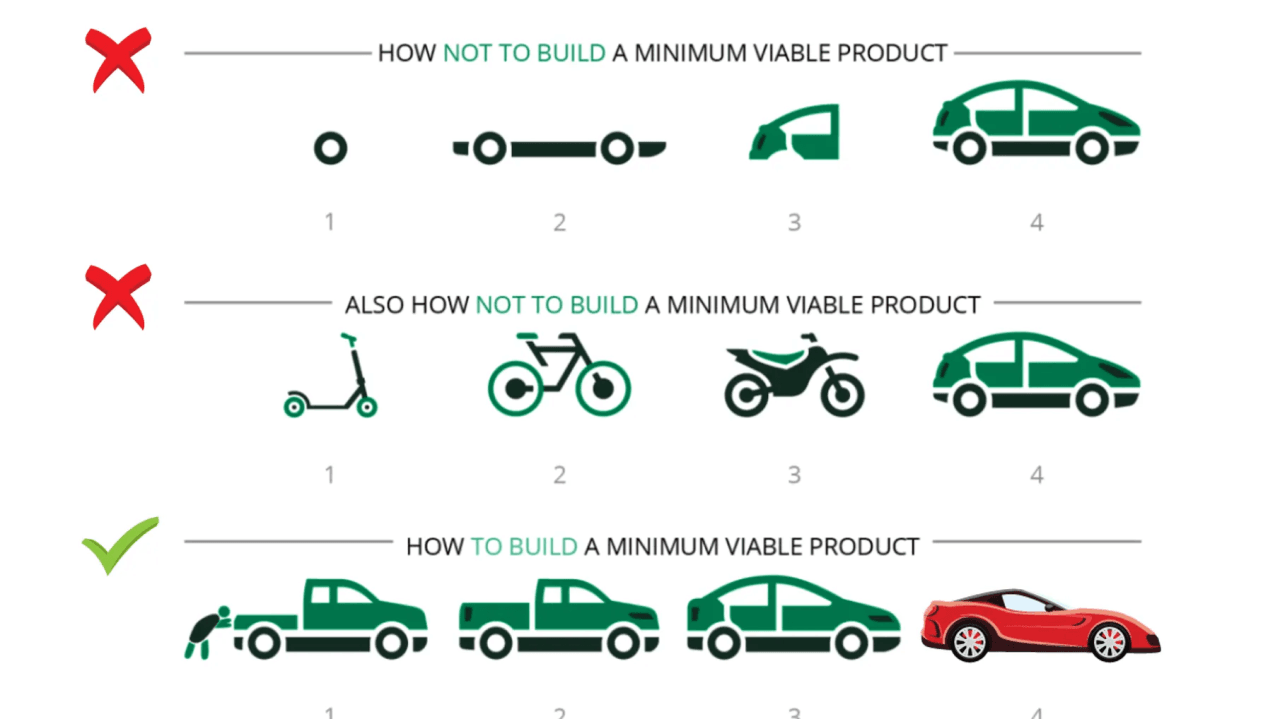
With a validated design in hand, we build. The key is ruthless scope management. Every feature request gets filtered through one question: "Does this help us test our core hypothesis?"
Weeks 11-12: Launch & learn
Ship to a small cohort, instrument everything, and start learning. The goal isn't perfection — it's validated learning that informs your next iteration.
Why speed matters
Every week you spend building without user feedback is a week of compounding assumptions. The 90-day constraint forces clarity and prioritization.
Common mistakes to avoid
- Over-engineering: Use proven tools and frameworks, don't build infrastructure
- Feature creep: Your MVP should do one thing well, not ten things poorly
- Skipping validation: Building without talking to users first is the most expensive mistake