The MVP Paradox
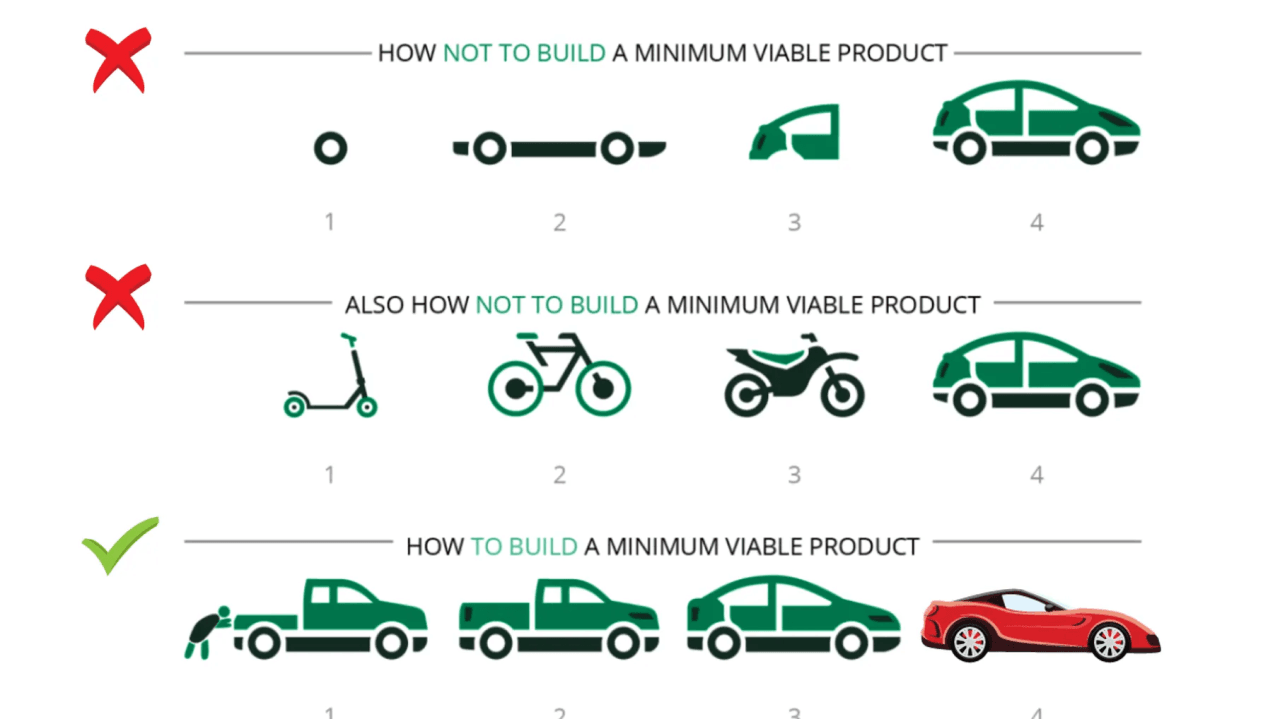
Every founder knows they need an MVP. Few know how to build one that actually scales. The term "Minimum Viable Product" has been stretched so thin it's lost its meaning — some teams ship a landing page and call it an MVP, while others spend 18 months building a "minimum" product with every feature they can imagine.
After building products for startups and scale-ups across fintech, health tech, sports tech, and more, we've found that the best MVPs share a common DNA. They're not minimal in ambition — they're minimal in scope but maximum in craft.
Principle 1: Start with the Hardest Problem
Most teams start with the easiest feature to build. This feels productive but creates a false sense of progress. The features that matter most — the ones that determine whether your product has real value — are usually the hardest to get right.
// Don't start here
const features = ['login', 'profile', 'settings', 'dashboard'];

// Start here
const coreValue = identifyCriticalPath(userProblem);
const mvpScope = features.filter(f => coreValue.requires(f));
When we built the Finit platform, we didn't start with user authentication or onboarding flows. We started with the core financial modeling engine — the hardest part — because if that didn't work, nothing else mattered.
Principle 2: Design for 10x, Build for 1x
Your architecture should handle 10x your launch traffic without a rewrite, but you should only build what you need for launch day. This means:
- Choose boring technology — Use battle-tested frameworks and databases. Now is not the time to experiment with that new runtime
- Design clean interfaces — Even if the implementation is simple, keep your API contracts clean so you can swap implementations later
- Avoid premature optimization — A PostgreSQL query that takes 200ms is fine for an MVP. You can add Redis later
Principle 3: Ship Weekly, Learn Daily
The cadence of shipping determines the cadence of learning. Teams that ship weekly learn 4x faster than teams that ship monthly. We structure every MVP engagement around weekly releases:
| Week | Focus | Deliverable |
|---|---|---|
| 1-2 | Core value proposition | Working prototype |
| 3-4 | User flows | Testable product |
| 5-6 | Polish + edge cases | Beta release |
| 7-8 | Feedback integration | Launch candidate |
Principle 4: Measure What Matters
Before writing a single line of code, define your success metrics. Not vanity metrics like page views or sign-ups — real metrics that indicate product-market fit:
- Retention: Are users coming back after day 1? Day 7? Day 30?
- Activation: What percentage of sign-ups complete the core action?
- Referral: Are users telling others about your product?
"The only metrics that matter are the ones that change your behavior." — We keep this on our wall.
The Bottom Line
A great MVP is not about building less — it's about building the right things with enough craft that users trust your product from day one. Speed matters, but not at the expense of quality. Ship fast, but ship something you're proud of.
At BlackBox Vision, we've refined this process across 50+ product launches. Every engagement starts with a clear scope, weekly milestones, and a relentless focus on the core value proposition.
Want to discuss your MVP strategy? Get in touch — we'd love to help you build something great.